
SMART CITIES Imagen 3 Imagen 4
Description and Characteristics
Imagen 7

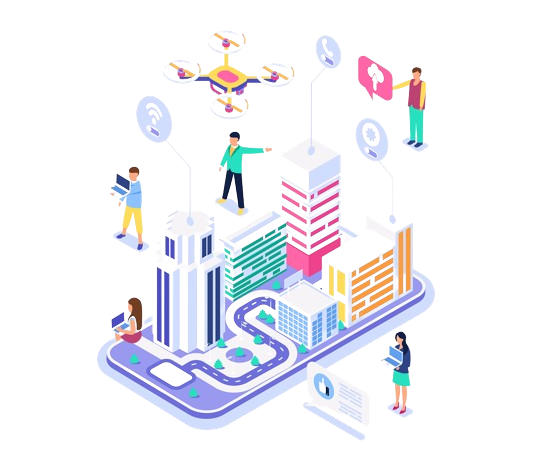
A smart city, also known as the city of tomorrow, is a concept that aims to create more efficient, safe, and sustainable cities through the use of technology.

These cities aim to integrate various aspects of society and daily life, such as mobility, security, energy, water, infrastructure, and services.

The concept of smart city encompasses the integration of systems and technologies into urban planning, transport management, energy, water, environmental management, telecommunications, public transport, e-commerce, and entertainment.


The main axes of smart cities are efficiency, interconnectivity, security and sustainability. Some pillars that materialize through:

The use of technologies such as drones, accident detection systems, and environmental information management systems helps local authorities make more efficient decisions about urban planning and land management. Smart cities implement intelligent public transport systems, such as autonomous vehicles, adaptive routes, and real-time traffic information. These systems aim to improve transport efficiency, reduce congestion, and minimize environmental impact. By using IoT-enabled smart meters and sensors, smart cities can monitor and optimize energy consumption, leading to cost savings and reduced environmental impact. Additionally, renewable energy sources like solar panels and wind turbines can be integrated into urban infrastructure to power the city. Smart cities leverage advanced data analytics and automated control systems to monitor and manage water resources efficiently. This can help reduce water wastage, optimize irrigation systems, and maintain ecosystem health. The use of IoT devices, AI, and data analytics in smart cities enables the monitoring and control of pollution levels, promoting cleaner air and safer communities. Smart cities employ advanced security systems, such as surveillance cameras, biometric authentication, and drones equipped with high-resolution cameras, to ensure the safety and security of their citizens. Smart cities use digital health technologies, such as smart sensors and mobile applications, to track and manage the health of their residents. Additionally, they offer resources and services, such as access to healthcare facilities and fitness programs, to promote well-being. Smart cities integrate cutting-edge technologies, such as AR/VR and smart devices, to enhance the digital experience in shopping, entertainment, and other activities.

In conclusion, the concept of smart city presents a unique opportunity to transform urban environments and enhance the quality of life for citizens. By implementing various technologies and systems across various sectors, smart cities can become more efficient, safe, and sustainable.

Advantages and disadvantages

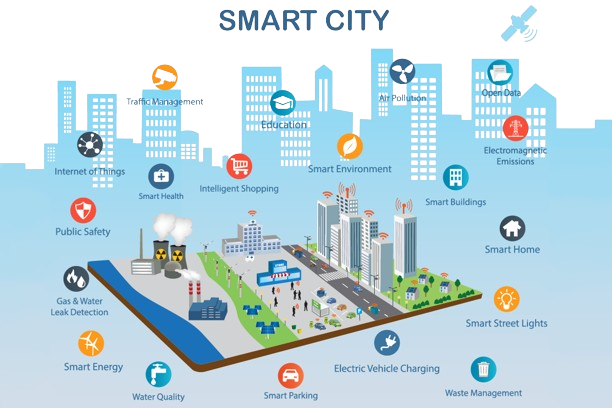
Smart Cities are cities that have developed the infrastructure, services, and policies needed to function efficiently, effectively, and sustainably. These cities aim to enhance the quality of life for both humans and the environment by improving various aspects, including human aspects, government, environment, and economy. Smart Cities leverage advanced technologies such as the Internet of Things (IoT) to monitor and control urban systems efficiently. IoT devices and sensors are installed throughout the city, collecting data on various aspects like traffic, energy consumption, and environmental conditions. This data is then used to optimize urban planning and make data-driven decisions that benefit the city's residents, businesses, and the environment.

Examples of IoT-driven smart city improvements include:
Imagen 8
  1. Automatic and efficient management of urban infrastructures.
  2. Energy savings and improvements in energy efficiency.
  3. Mobility management, with better traffic management and optimized parking solutions.
  4. Increased and improved green areas and peripheral areas.
  5. Regulated lighting for reduced energy consumption and expense savings.

Smart Cities also promote sustainable economic development through cost reduction, increased efficiency, and better allocation of resources. Some examples of this include:

  1. Smart card systems for citizens, such as health cards and transportation cards, leading to reduced energy expenditure.
  2. Car sharing systems, which not only reduce emissions but also provide more accessible and convenient transportation options.
  3. Mobility management, with better traffic management and optimized parking solutions.
  4. Mobility management apps that help citizens interact with their city, improve traffic flow, and manage public spaces.

Overall, Smart Cities offer a range of benefits for citizens, businesses, and the environment, including improved urban planning, enhanced public safety, increased environmental sustainability, and a more cost-effective approach to city management. By harnessing the power of IoT and advanced technology, Smart Cities have the potential to transform urban living and pave the way for a more sustainable, connected future.

In the context of smart cities, technological disadvantages are also addressed. Some of these disadvantages include:

Imagen 9
  1. Loss of privacy: The top concern is the loss of privacy that smart cities could cause. As the technology in cities increases, companies offering these services control a significant amount of information and personal data of citizens. This can generate distrust and fears that personal information could be used in unintended ways.
  2. Social distance: Smart cities also have a negative impact on people's social lives. By focusing on efficiency and technology, smart cities can become detached from personal and community interactions. Additionally, the isolation generated by excessive technology use can increase stress and anxiety.
  3. Difficulty of adoption: In some cases, adopting technologies and services in smart cities can be difficult and expensive. Some people or communities may not have the financial resources necessary to implement these technological solutions, which could create inequality in the adoption of smart cities.
  4. Absence of government commitment: Government commitment to smart cities can also be a problem. In some cases, governments may not be committed to implementing technological solutions in their cities, which could limit progress and impact on smart cities.
  5. Resistance to change: Society in general may also resist the shift towards smart cities. Individuals may feel uncomfortable or disconnected when changing to a society that is increasingly based on technology, which could make it difficult to adopt these solutions in cities.

In summary, although smart cities have many advantages, they can also present disadvantages related to the technological aspect. Some of these disadvantages include loss of privacy, social distance, difficulty of adoption, absence of government commitment, and resistance to change. To address these disadvantages, it is important that smart cities develop policies and strategies that guarantee transparency, security, and citizen participation in the process of adopting technologies and services.

Examples of the actuals smart cities
Some examples of this are:

Imagen 10
In this city, an intelligent waste management system has been implemented due to the increase in waste production in urban areas. To do this, they have placed sensors in the waste containers to measure the filling levels and thus be able to notify when the containers are ready to be emptied.

Imagen 11
En Miami encontramos también el sistema de alumbrado público inteligente. Este consta de cambiar el sistema a LED además de una buena conexión. Por otro lado, pueden ajustar automáticamente su brillo según los períodos de inactividad y pueden transmitir información de mantenimiento para tiempos de respuesta más rápidos. Con esto podemos reducir los costos de energía y mantenimiento.

Imagen 12
Here we find the London Development Database (LDD), a collaborative project for the management of construction permits and their different phases in real time, which can be accessed by any citizen through the web.

Imagen 13
Equal access to technology has been expanded through the LinkNYC network, which replaces telephone booths with fast and free Wi-Fi access points to access city services. Regarding traffic, the city applied the Midtown in Motion program to manage rush hours in the center. Using speed sensors and a data center managed by urban traffic engineers, a 10% improvement in travel times has been achieved.

Imagen 14
Paris has promoted an IoT infrastructure, through which it seeks to optimize traffic and people flows. In addition, a complete restructuring of the transport system has been planned through the Grand Paris Express, which will include among the initiatives a 100% automated metro thanks to Big Data.

The future of the tecnology
Imagen 15

To face the changes that are presented to us, things are being proposed such as changing the energy model, the search for increasingly sustainable urban mobility, automation and improving information management and public infrastructure, among others. Great challenges that can only be achieved by betting on the two key elements of this so-called “4.0 revolution”: innovation and technology.

Therefore, smart cities will attempt to achieve greater efficiency in their planning, use and management and greater interaction and quality of life for their citizens. They will undoubtedly have to bet on these implementations linked to sustainability, which will experience exponential growth in the coming years. And thus, implement solutions to reduce their greenhouse gas emissions by 20%, increase the quotas of renewable energy to 20% of consumption, or establish a minimum quota of 10% in the transportation sector, among others.

But they will not be the only changes that are coming and that will help create more sustainable cities in the future. The growth of secondary raw materials industries, the rise of bioclimatic architecture, the development of Open Data platforms and the implementation of ICTs that facilitate smart government... all of them will be necessary changes, which are added to those already mentioned and which all smart cities will experiment in the coming years.

Therefore, we can say that sustainability will be a value that is increasingly in demand by both governments and society, as well as a factor that will undoubtedly be taken into account when establishing increasingly restrictive laws. Therefore, the companies with the best reputation and best value, and those that will be worth investing in, will be the ones that adapt to these changes for a more sustainable future.

References

https://xactus.io/blog/es/tecnologias-inteligentes-implementadas-en-las-smart-cities/

https://abamobile.com/web/tecnologia-en-smart-cities-apps-iot-big-data/

https://www.iberdrola.com/innovacion/smart-cities

https://www.repsol.com/es/energia-futuro/tecnologia-innovacion/smart-cities/index.cshtml

https://iurban.es/que-es-una-smart-city/

https://www.bbva.ch/noticia/ventajas-y-desventajas-de-las-smart-cities/

https://ovacen.com/smart-city-ventajas-y-desventajas/